

The Cecil Hotel has evolved from a family business into a historical landmark over the years. The history of the building is terrifying, as the hotel was the site of many tragedies and human suffering. Read more on calgary1.one.
Construction and Opening
Built in 1911 from brick and sandstone, the hotel’s owners purchased advertising in the Albertan (Calgary Sun) to attract new guests. The East Village area, where the hotel was constructed, had a poor reputation due to being inhabited by workers, bikers, sex trade workers, and homeless communities. It was an industrial zone and a place frequently visited by police officers, workers from a nearby mattress factory, and anyone seeking cheap beer.
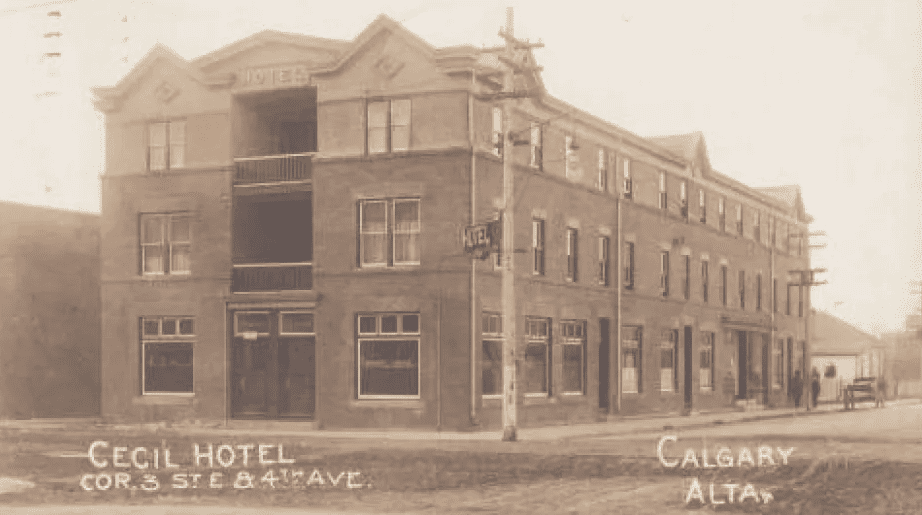
The hotel officially opened in 1912 as a luxurious, well-equipped inn for working-class travelers. By 1914, it had its own orchestra, a grain storage, and a stable with a blacksmith shop where guests could leave their horses or rent them. There was also a small shop, a café, and a tavern, which occupied almost the entire first floor until the prohibition era of the 1920s.
The hotel’s owners at the time, Joseph Schuster and Charles Pohl, were well-known German-Canadian businessmen.
New Owners, New Clientele
In the 1960s, the tavern reopened. From 1938 to 1967, the hotel was owned by A.E. Cross, a prominent Calgarian and owner of Calgary Brewing & Malting. In 1968, he sold it to Leo Silberman and his partner Saul Rosenbaum.
Leo Silberman, a Holocaust survivor, moved to Calgary to start a new life. He briefly worked at a 7-Up factory and saved enough money to buy the hotel.
When alcohol prohibition was reintroduced, residents of Calgary began searching for affordable places to gather. The Cecil Hotel opened its doors for these purposes. Cheap beer attracted students as well. In 1978, the hotel was managed by Silberman’s son, Sam.
By the 1940s, gay communities had begun to form in Calgary and Edmonton, but the push for “clean social conditions” led the William Aberhart government to pressure these groups. During high-profile trials in 1942, 12 men were convicted for participating in a homosexual group. As a result, gay people began seeking safe spaces in Calgary. Once again, the Cecil Hotel became one such space. In the 1960s, the lesbian community would also gather here after softball matches. The hotel served as an underground refuge for celebration.
Drugs, Prostitution, and Violence
Under Sam’s management, drug trafficking, prostitution, stabbings, and even murders became regular occurrences at the Cecil. This was due to the boom in Alberta during the late 1970s and early 1980s, which brought on a wave of social problems.
In 1979, two employees were shot in the back of the head over $100 in the cash register. By 1982, 2,600 people a month were arriving in Calgary, exacerbating the housing shortage, filling homes, and increasing street crime. In 1982, an accidental smoker caused a fire that spread to the hotel’s upper floor, sending six people to the hospital and leaving smoke damage in rooms and corridors. This fire became one of the reasons the hotel could not be restored.

By the 1990s, stabbings, beatings, and kidnappings were too frequent to count. Hotel cleaners collected drug paraphernalia, empty alcohol bottles, and discarded condoms every day. Women living in the nearby YWCA Mary Dover House feared going outside to avoid harassment and attacks.
Addicts and people vulnerable to easy access to alcohol and illegal drugs gathered at the Cecil. Violent and sexual acts, as well as murders, were common occurrences. Newspapers were full of stories about arson, prostitution, cigarette and drug smuggling, and bodies found in parking lots and rooms.
In 1999, the Calgary Police Service assigned Frank Cattoni as an undercover officer at the hotel. Nearly every year, there was a murder at this location. In 2007, the police received a record number of calls—1,700.
In 2008, around 1:00 AM, police and emergency medical services received a call about a stabbing at the Cecil. Upon arrival, they found a 23-year-old man dead in the tavern.
Crime at the Cecil became so out of control that in 2008, the police requested that the city government declare the tavern a threat to public safety. The hotel itself was closed. Six months after its closure, police noted a 91% decrease in calls.
Fate After Closure
After its closure in 2008, the city purchased the building from owner Sam Silberman for $10.9 million. In 2013, a massive flood flooded the hotel. The building absorbed water from the damaged roof and became covered in mold. Over the years, the hotel’s neglect only increased.
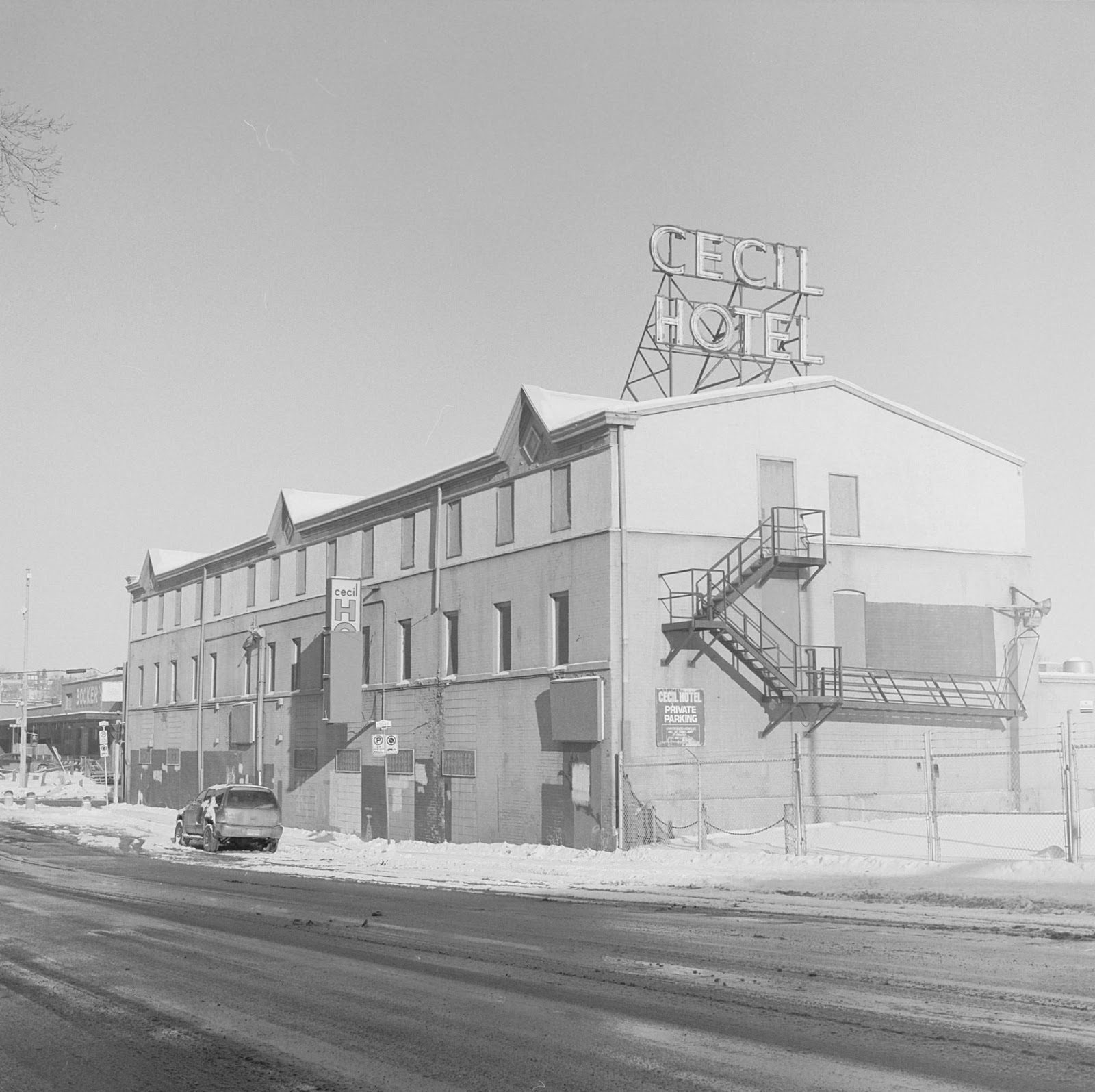
In 2015, the building and land were purchased by the Calgary Municipal Land Corporation (CMLC). Windows were boarded up, and the building was painted a pale blue shade that became inconspicuous against the winter horizon. The Cecil was one of the six hotels that had been preserved from the First World War era.
Calgarians were divided into two groups: those advocating for demolition and those calling for preservation (the minority). Most people saw the Cecil as a trash heap not worth restoring, rather than a historical gem.
Despite the minority’s great hopes of honoring the historical significance of the hotel and incorporating it into the structure of the revitalized East Village, the building was demolished in December 2015. The owner and the Calgary Municipal Land Corporation found that the fire and flood had caused too much damage, making it impossible to restore the building. It would take a significant amount of money and effort to restore both its appearance and reputation. The historical sign was preserved and reconstructed and placed at the St. Louis Hotel as a temporary art installation.
The 43,000 square-foot land plot remained a prime opportunity for development with potential for mixed-use development in East Village. The hotel itself forever remains in the memory of Calgarians as a site of many tragedies and human suffering, an epicenter of prostitution, drugs, murder, and despair. It was a gathering place for people in need of temporary housing, those seeking company for the night, and those looking for fights. Guests who stayed in its rooms were viewed as insignificant, poor, and discarded.
A Haunting Similarity
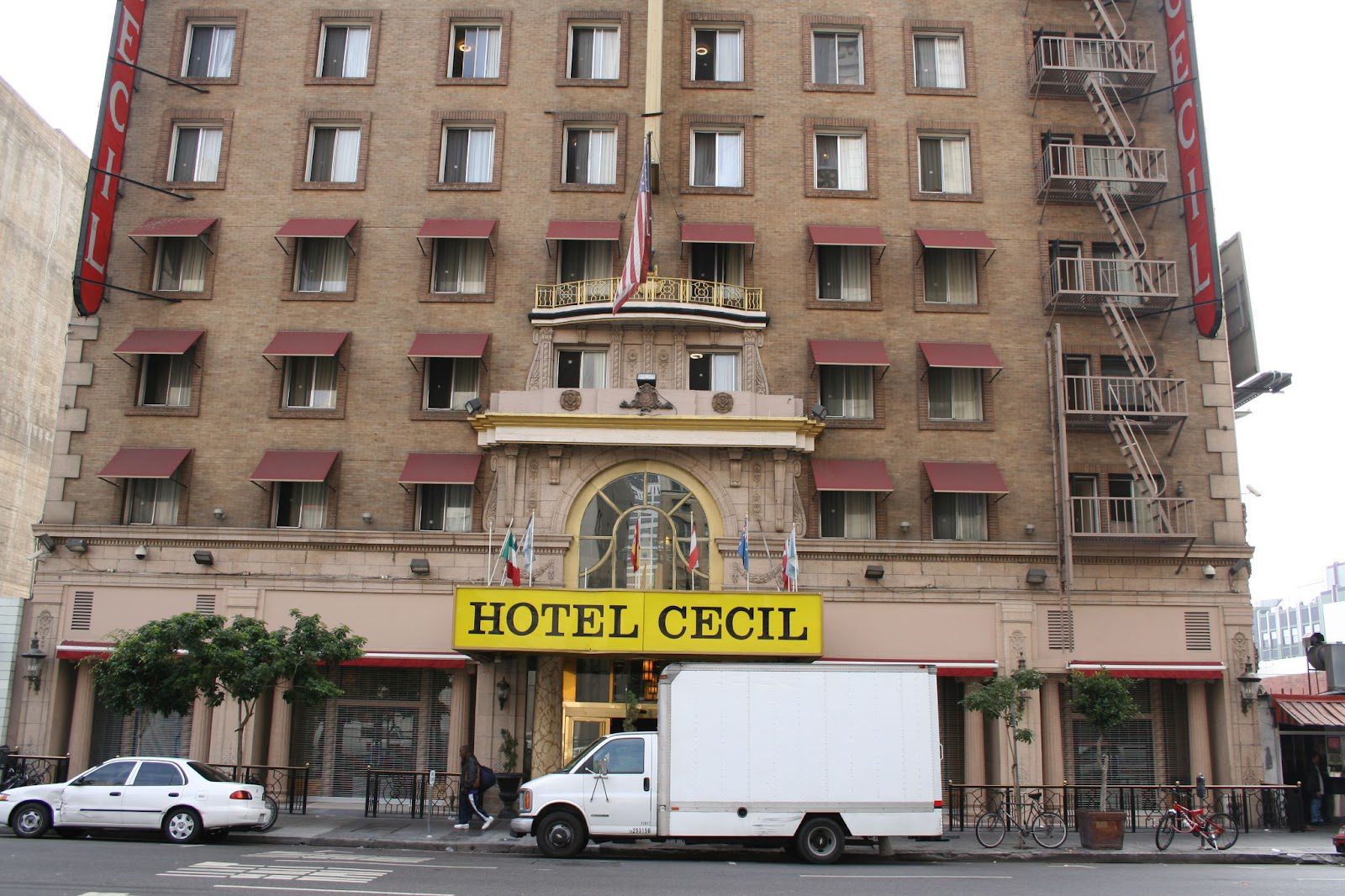
Interestingly, in Los Angeles, at a hotel with the same name, at least 80 people died over the span of 10 years. They disappeared, overdosed, committed suicide, and so on. At least 16 of the deaths were sudden or unexplained.
The Cecil Hotel in Los Angeles opened in 1927 as a lodging place for business travelers and Hollywood tourists. However, after the Great Depression, the hotel began to decline and gained a reputation for suspicious deaths. Serial killers, such as Richard Ramirez, the “Night Stalker,” and Jack Unterweger, who killed at least three sex workers during his stay, stayed at the hotel.