

Everything that was needed for the survival of Indigenous peoples existed on their traditional lands—medicinal herbs, roots, rivers, game animals, berries, vegetables, and more. By the most modest estimates, Indigenous peoples have lived in the area now known as Alberta for at least 13,000 years. Read on at calgary1.one to learn more about how they structured their lives and what they did to sustain themselves. More on calgary1.one.
The Myth of Indigenous Underdevelopment
According to the beliefs of the Indigenous peoples, the Creator endowed all animals and plants with spirits, so humans, when consuming other living beings, should do so with respect for them as creations of God. If this respect was not observed, they would be deprived of all game and vegetation. For instance, the Cree people regularly gathered in circles for communal prayer, discussions, and healing. Similar beliefs were held by the Blackfoot and Dene (Athabaskan).
At first glance, it may seem that the Indigenous peoples of Alberta did not undergo significant historical development until they came into contact with European settlers and became involved in the fur trade. During the colonial conquest, many called the Indigenous people primitive. Europeans assumed that Indigenous peoples engaged only in hunting and gathering, using unchanging, instinctively understood methods.
However, the idea that the Indigenous peoples of the Americas were less technologically developed than Europeans was primarily based on the superiority of the conquerors in terms of weaponry and their logic that those who were conquered were of a lower social status. At the same time, the information available about Indigenous achievements was limited due to the lack of means to record it and the many microbes and instances of violence that led to millions of deaths over a short period.
For example, the Inca Empire, centered in Peru, was known for building earthquake-resistant buildings and roads that were flood-resistant—all without advanced mathematical or geological knowledge! Meanwhile, Spanish conquerors scorned the Incas, refusing to adopt their knowledge, instead building structures using European technologies that were easily destroyed by earthquakes or roads that quickly became submerged during floods.
The achievements of Alberta’s Indigenous peoples may seem modest when compared to those of the Incas, Mayans, or Aztecs, who built enormous temples and numerous roads and irrigation channels. Yet, the Indigenous cultures of the Canadian prairies also possessed complex technologies.
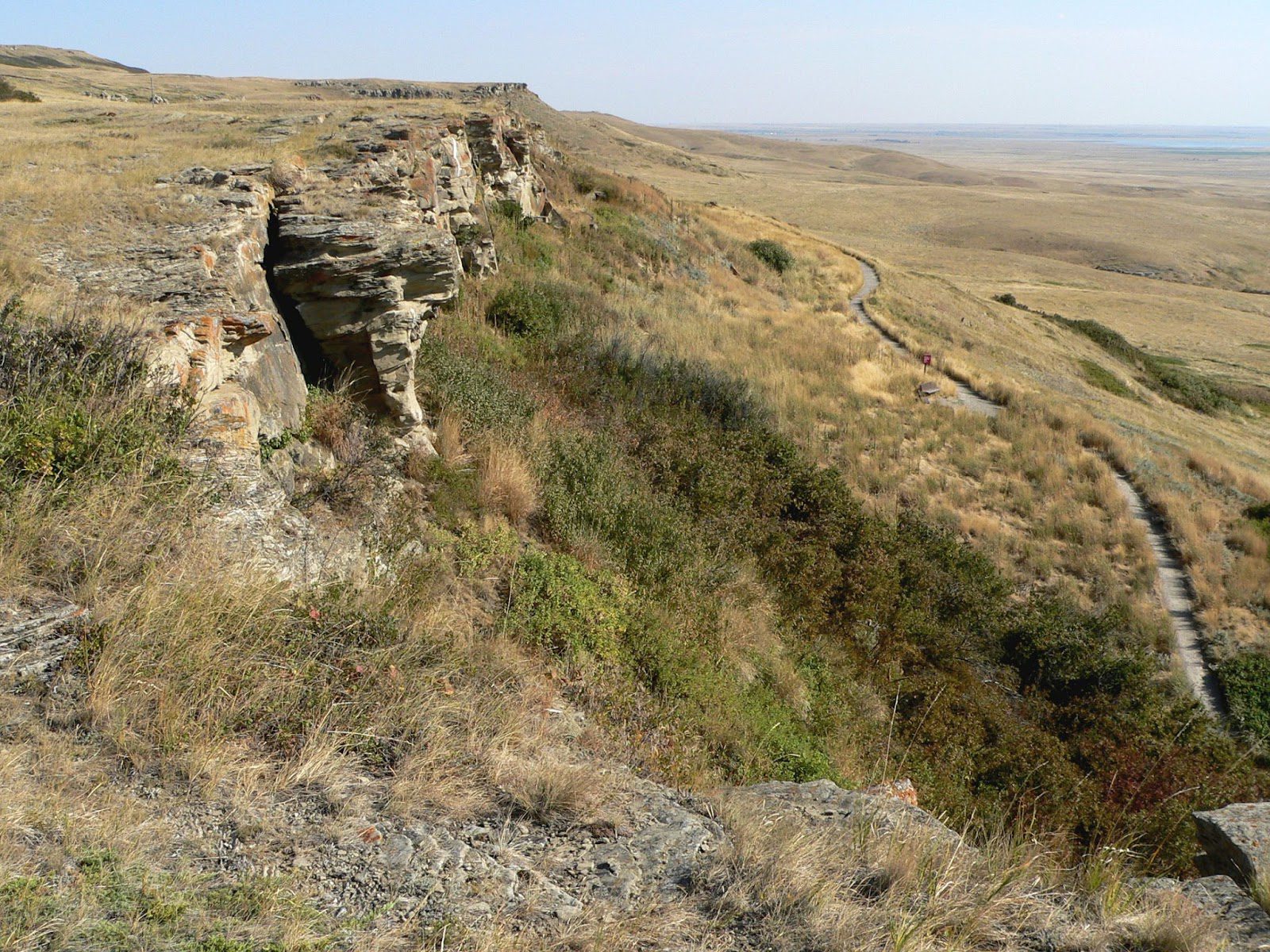
As archaeologist Jack Brink, who led the team that reconstructed Buffalo Jump (a rocky formation in southwestern Alberta used by Indigenous peoples of North America for hunting bison), stated, the first peoples developed their own technique to drive animals off cliffs, killing them with minimal risk to humans.
Invention as a Necessity
Innovation was also necessary to understand which animals to select from a herd to obtain enough fatty meat. Indigenous peoples would focus on the wool over the eyes, the horns, and the stripes along the back. In addition to using bison for food, the Indigenous peoples also learned over time which parts could be used to make clothing, sleds, tableware, and gunpowder flasks.
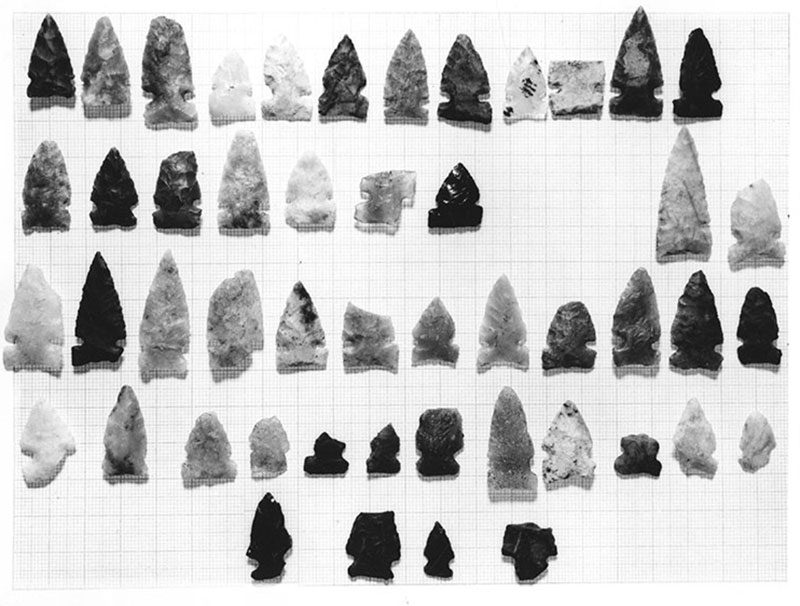
For killing large game and small animals, Indigenous peoples had specialized throwing tools with large tips. For hunting bison, they developed tools made of bones and horns. Multifunctional stone tools and Folsom points have survived from that time.
Migration as a Catalyst for Innovation
The melting of glaciers triggered large-scale migrations within Alberta and other parts of North America. For instance, a dug-up burial complex, dated to between 4900–4400 BCE, contained copper and evidence of stone use, indicating the migration of peoples from areas where stone was boiled to obtain bone grease, including the Great Lakes region (covering Ontario and eight American states). This grease was used to preserve meat for as long as possible.
Later, migration from the present-day U.S. Midwest occurred, as evidenced by findings of iron and copper points, as well as unique pottery styles that were atypical for the region.
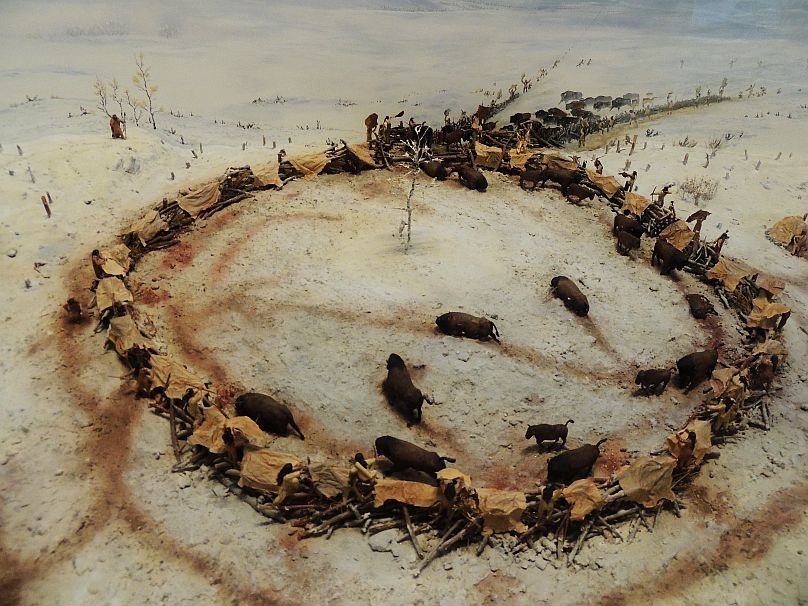
The technologies brought from other regions helped make hunting more successful. Gradually, tools such as spears, bows and arrows, and the buffalo pound—a round enclosure for capturing and slaughtering bison—were introduced. Although the animals were strong enough to break through the barriers set up for them, their instincts led them to stop at the barrier. This method eventually gave way to another one: animals were led along a path that ended not at a barrier but at a high cliff, where bison fell to their deaths.
Ritual Practices
As mentioned, the Indigenous peoples of North America held sacred beliefs. To please the Creator, they developed various rituals, one of which was the Sun Dance. This ritual united related communities, allowing them to restore relationships, have fun with dancing and singing, and for young people to demonstrate their courage during a ceremony that required them to inflict pain upon themselves.
Among the Blackfoot, this practice lasted several days. Although it was mostly attended by men, the event was led by a woman. Each participant had a pouch containing items received either at birth or for special achievements. These items were consecrated and later used to establish a connection with the spirits.
Labor Practices of Different Peoples
The Dene people, who lived primarily in northern Alberta, lived in small communities (20–30 people). They fished, hunted small game, caribou (reindeer), used trees, gathered berries, and other fruits. The Dene were quite self-sufficient, which is why they engaged in only minimal trade with other communities. At the same time, they believed that during times of hardship, help should be mutual.
Women and men of the Dene performed different social roles. While the men hunted caribou far from home, the women cared for the children, hunted small game near the dwelling, and gathered berries. Men made boats and hunting tools, while women made household items and clothing. Interestingly, among the Dene, it was common to exchange wives or share them with other men without their consent. During times of famine, infanticide almost always involved girls.
The Dene did not share the European view of women as the weaker sex, believing instead that women were naturally stronger and more resilient than men. Often, women would carry the carcasses of animals instead of men or carry heavy items when the camp moved.
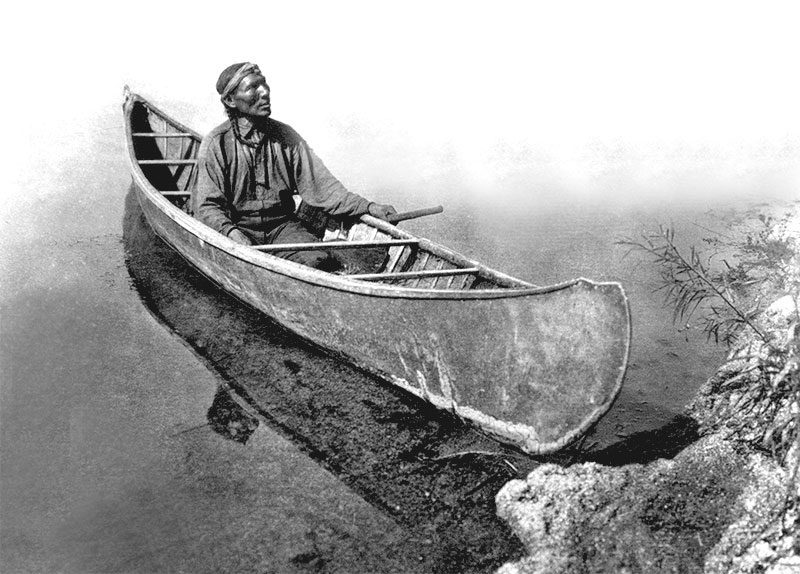
The Cree people formed slightly larger communities (50–100 people). Women made tipis (portable dwellings) from deer or moose hide. The Cree primarily traveled in sturdy canoes made from birch bark, crafted by the men. Every summer, the Cree would gather at their center to renew friendships.
The Sioux and Blackfoot tribes, who lived primarily in southern Alberta, had less equality among their members than the previous peoples, especially when they began hunting bison. Those who knew the intricacies of planning the hunt, selecting animals, and quickly preserving meat had higher social status.
Hunting leaders, warriors, and shamans were at the top of the social hierarchy. Their dwellings were larger than those of other people, and they often had multiple wives. Leadership positions were not hereditary; a chief earned the tribe’s trust by showing care for every member.
Indigenous peoples knew how to share with those in need, not only within their community but also with other Indigenous peoples. Among the tribes, it was understood that any group could hunt or gather fruits on the territory of another tribe, provided that the group in need of food was not experiencing a shortage of their own.