

Throughout its history, Canada has grappled with decisions regarding which nationalities are allowed to immigrate and for what purposes, often influenced by race. People with lighter skin were typically equated with intelligence, honesty, and civilization, while individuals of color were seen as a homogeneous and cheap labor force.
Non-Europeans were considered the least desirable immigrants in Canada. In the early 20th century, when there was a demand for farmers, especially in the western regions, the Canadian government classified certain people as “non-white,” preventing them from acquiring Canadian citizenship. These workers were seen as capable of working only under strict supervision and in specific labor sectors. Read more on calgary1.one about how African Americans and Asians were treated in Alberta. More on calgary1.one.
Indigenous Peoples: The First Victims of Racism
Indigenous peoples in Canada were the first to experience racism in Alberta. European fur traders effectively displaced the rights of Indigenous peoples to their lands. The indigenous population was seen as an obstacle to economic development and the nation-building process because they lived on territories crucial for national expansion.
In an effort to benefit the state, the government placed Indigenous children in residential and industrial schools, where they attempted to change their traditional work habits, pushed for the adoption of Christianity, and forced them into hard labor. The goal of the federal government was to assimilate Europeans and Indigenous peoples, making the latter a cheap labor force that would work for the state’s benefit.
Despite numerous restrictions, the contributions of Indigenous peoples to the Canadian economy were immense. However, their wages were extremely low—on average, under $5 per year in Alberta, compared to $22 in other provinces, such as Nova Scotia, New Brunswick, and Ontario. This poverty contributed to deteriorating health and poor educational outcomes among the youth, which negatively impacted the country’s economy.
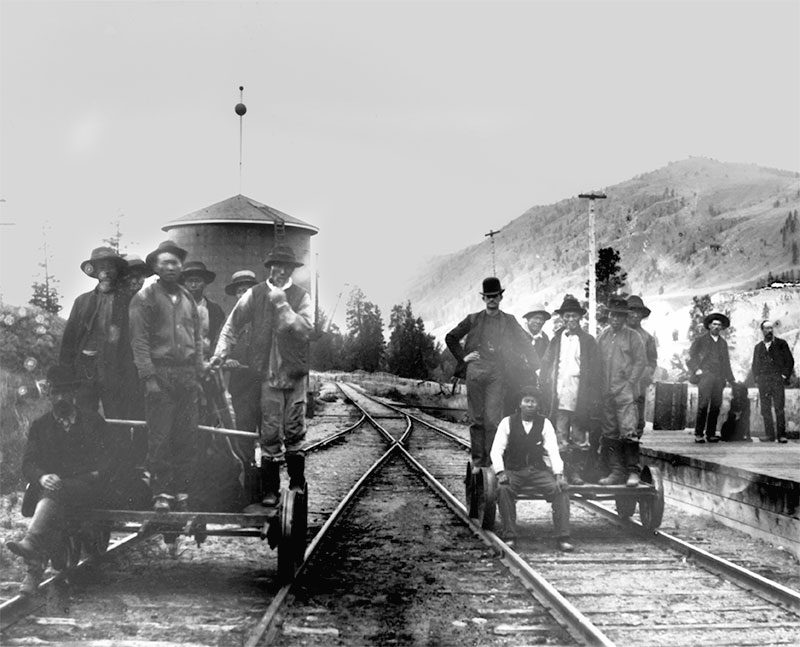
In the early stages of capitalism, Indigenous people could still find some work—fishing, construction, timber cutting, working on the railroads, and in forestry. However, later technological changes and shifts in industry reduced their opportunities for employment, leading to high levels of unemployment among Indigenous peoples.
Immigration Restrictions
Immigrants also faced colonial treatment, especially African Canadians from the United States, Chinese people, and Indians. Chinese workers, who arrived in Alberta in the 1880s, were used as cheap labor during the construction of the railway, particularly on the dangerous mountain passes.
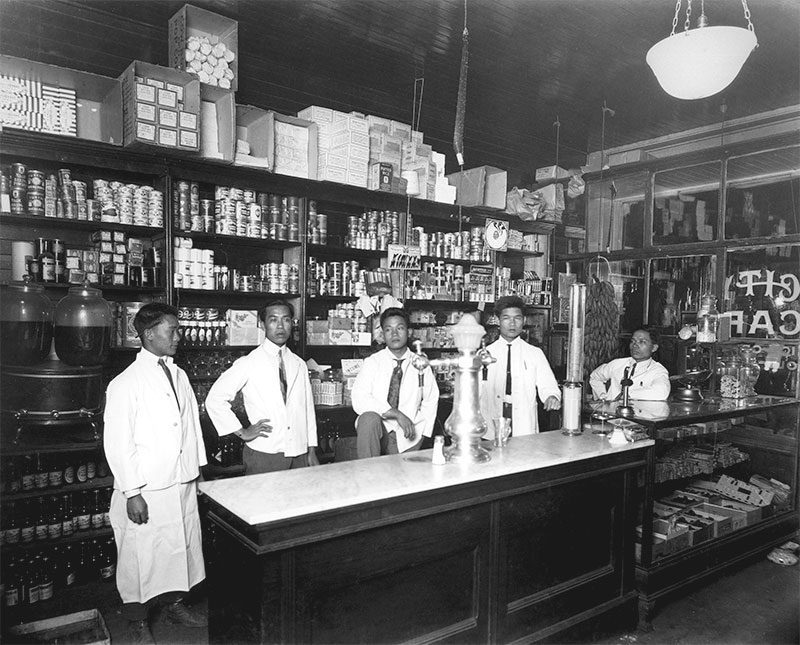
For those Chinese workers who survived such hazardous labor, the government imposed taxes to prevent them from bringing their families to Canada. With limited access to education, Chinese workers typically worked as store clerks, merchants, cooks, farmers, laundrymen, and miners.
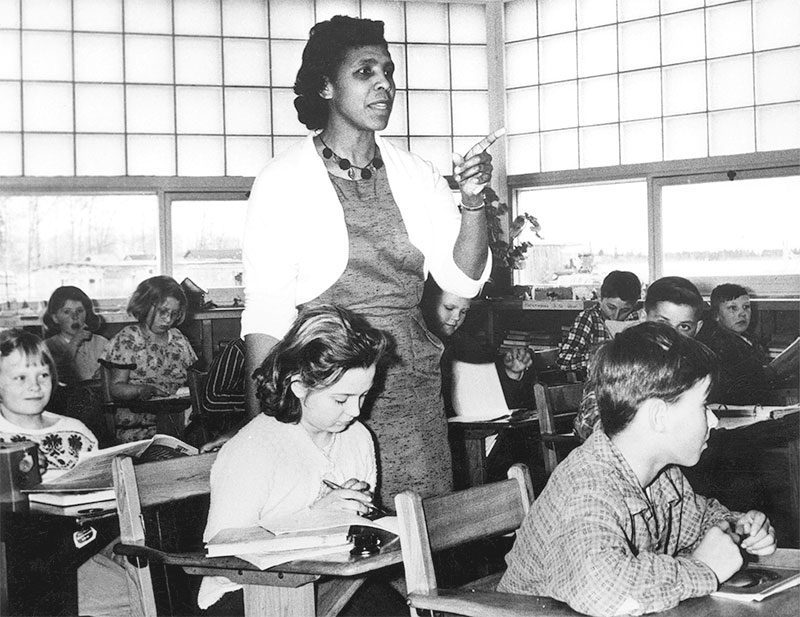
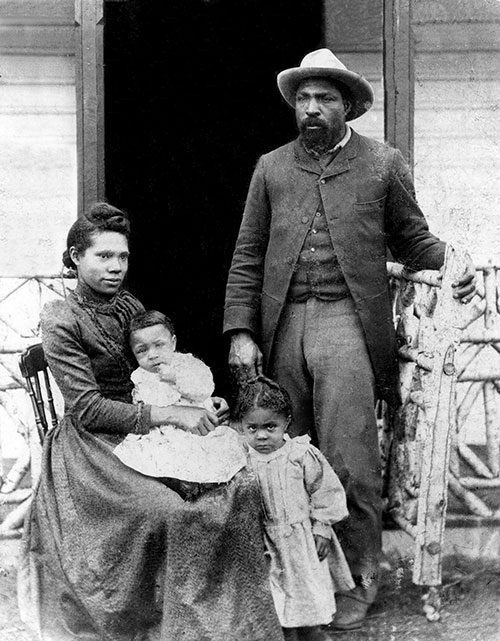
Over time, informal immigration restrictions became formalized. In 1910, changes were made to the Immigration Act, making race a legal barrier to entering the country. A memorandum issued that year prioritized white races for employment. The following year, the Government Council of Canada explicitly recognized the “Negro race” as unsuitable for the country’s climate and needs. Despite government opposition and resistance from much of the Canadian population, African Americans were able to come to northern Alberta in the early 20th century.
Who Worked in Non-White Jobs?
To survive, some Chinese workers started their own businesses, such as laundromats, grocery stores, markets, and eateries. Others worked on ranches, as cooks, servants, and hotel workers. These jobs were low-paid and did not offer days off. As the Edmonton Journal noted in 1918, Chinese laundresses sometimes worked 16 hours a day, seven days a week, for $15 per month.
As for African Canadian women, they most commonly worked as domestic servants, while African men from the U.S. and the Caribbean worked as porters on the railroads.
This situation led to the emergence of new stereotypes about people of color: African Canadian men were associated with service jobs, such as sleeping car porters and shoeshiners, while Chinese Canadians were associated with women’s work, such as laundry and food preparation. These stereotypes influenced Canadian society to the point that, in the 1920s, members of the Calgary and Edmonton communities submitted petitions to the municipal governments to ban Black people from public swimming pools.
The Great Depression and Its Impact
During the Great Depression, many Chinese workers in Alberta resorted to suicide due to unemployment and starvation. Unemployed Chinese workers in Calgary were paid only $1.12 per week, while other nationalities received $2.50. In 1923, the Chinese Exclusion Act was passed, almost completely banning Chinese people from entering Canada. This wasn’t repealed until 1947.
During World War II, the “enemy” immigrants were Japanese. Many of them were relocated from coastal British Columbia to Alberta to work for white farmers on sugar beet fields. Interestingly, sugar beet fields were also a common workplace for many Indigenous peoples.
Post-War Immigration Boom
After World War II, the Canadian government slightly relaxed restrictions for people of color. By 1967, Alberta had attracted more immigrants than Manitoba and Saskatchewan combined.
However, the rules for entry remained very strict. Immigrants were allowed into Alberta if they could work as teachers or had skills and knowledge in the oil industry. Those who managed to find work in their field were still encouraged to pursue further qualifications at colleges or universities, although the entrance conditions were much more difficult than for white applicants.
From 1973 to 1982, Alberta experienced remarkable economic growth. Immigrants who arrived before 1981 benefited from the boom, while those who arrived later faced economic recession. In 1976, Calgary and Edmonton together accepted 50% more immigrants than Winnipeg. In 1971, there were only 7,900 Asians in Calgary, which was modest compared to other nationalities (for context, there were 225,000 Britons living there at the time).
Growing cultural communities of non-whites formed their own organizations to fight for better working conditions and expand employment opportunities. In 1979-1980, about 750 refugees from Southeast Asia arrived in Alberta, and by mid-1984, nearly 15,000 immigrants from Southeast Asia were settled in the province. During the 1970s and 1980s, Black and Asian workers earned lower wages than their white colleagues, even though they had better education and more experience.
Stereotypes and Activism
Stereotypes about newly arrived colored workers persisted into the late 20th and early 21st centuries. Many believed that non-white races were incapable of unionizing and lacked commitment to union principles. Immigrants from Asia, the Caribbean, and Africa, however, actively demonstrated their interest in unions and workers’ rights, as evidenced by a laundry strike in Calgary in 1995 and a meatpacking plant strike in Brooks in 2005.
The injustice of the past was evident in the second decade of the 21st century, when the booming West began actively recruiting Asian workers to build infrastructure and fill jobs in the service industry. Alberta attracted many workers from China, the Philippines, Sri Lanka, and others for work in construction, restaurants, and care for children and the elderly.