

The McDougall Centre, now a hub for provincial politics, once played a vital role in teacher education. This iconic sandstone building in downtown Calgary has served various purposes throughout its history. Learn more about its journey below on calgary1.one.
Construction and Opening of the Normal School
On September 1, 1905, Alberta officially became a province. To support the rapidly growing population, the provincial government quickly designated a capital, planned elections, expanded railways, introduced telephone lines, and developed an education system.
Calgary was chosen by the Legislative Assembly as the site for Alberta’s first normal school (teacher training college). Historians suggest this decision served as compensation for Edmonton being named the provincial capital.
At the time, teaching was becoming increasingly popular; between 1900 and 1906, Calgary’s student population grew by 116%. In January 1906, temporary teacher training facilities were set up on the top floor of Central School (later renamed the James Short School). That same year, the city purchased land for the new Calgary Normal School for $15,000. Premier Alexander Cameron Rutherford laid the cornerstone in 1906.
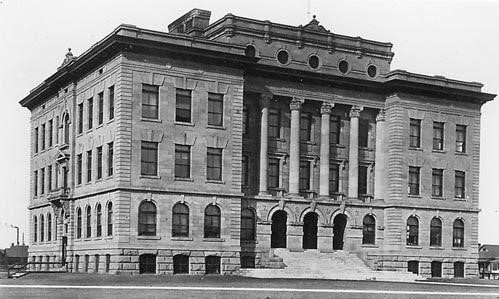
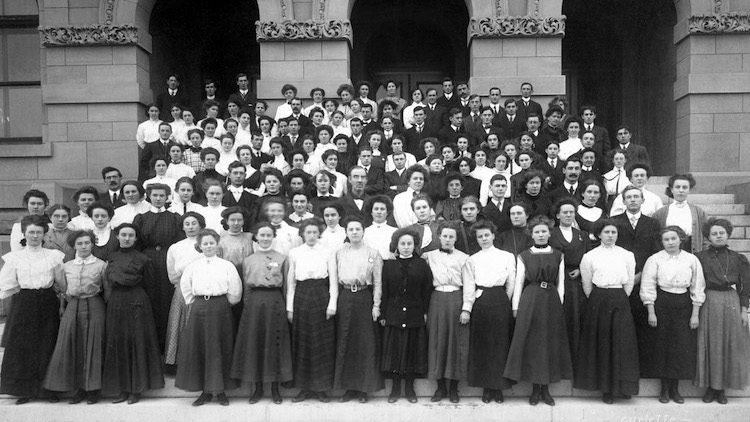
The college officially opened in 1908. It was the largest educational facility in Alberta, costing $150,000—a significant sum at the time. Two instructors trained 26 aspiring teachers from across Canada. The program lasted four months, after which graduates were required to manage classrooms and teach a full range of core subjects.
From School to Government Centre
In 1922, teacher education moved to the Provincial Institute of Technology and Art campus (later the Southern Alberta Institute of Technology, or SAIT), to accommodate growing class sizes.
The Calgary Public School Board purchased the former normal school building and renamed it McDougall School, in honour of missionary John McDougall. John’s father, George, established missions in Victoria, Edmonton, and Morley. John himself participated in missionary work, authored several books, and translated hymns and the Bible into the Cree language.
John McDougall was also deeply involved in public service and Indigenous relations. During the Northwest Rebellion, he acted as a mediator between Alberta’s Indigenous tribes and the federal government. After retiring in 1906, he served as a Dominion government commissioner and an official in the Department of Indian Affairs. He passed away in Calgary in 1917.
Over the next 60 years, McDougall School functioned as a junior high and later an elementary school, also housing the school board’s offices. The school closed in 1981 due to declining enrolment.
Transition to a Government Facility
After restoring Government House in Edmonton in 1976, Alberta’s government sought a similar venue in Calgary for official meetings and conferences. In 1982, the province, in collaboration with the Calgary Board of Education and the City of Calgary, purchased the former McDougall School for $20 million. On September 10, 1982, the building was designated a Provincial Historic Resource.
On September 8, 1987, Alberta’s Lieutenant Governor Helen Hunley officially opened the McDougall Centre as Southern Alberta’s government centre. It serves as both an office space and a venue for provincial officials. Today, it is a popular spot for wedding photography, tours, and educational events.
Landmark Architecture
From its opening in 1908, the McDougall Centre’s architecture became a source of pride for Calgarians. Local newspaper The Albertan called it “the finest in the Dominion.” This three-storey sandstone building with a mansard roof was among the first large public structures in Alberta. It is listed on the Alberta Register of Historic Places.
Designed by provincial architect Allan Merrick Jeffers, the building is an example of Beaux-Arts architecture inspired by 16th-century French academic design. Beaux-Arts was a prominent style for North American public buildings in the early 20th century, valued for its elegance. Features include a flat roof, grand entrances, arched windows, symmetry, and classical details such as balustrades, pilasters, and cartouches. Jeffers also designed the Alberta Legislature Building in Edmonton.
The symmetrical building features intricate stone carvings and extensive detailing. Granite steps lead to a triple-arched entrance, flanked by colossal columns. The interior boasts plaster mouldings and carved oak woodwork. Five circular windows illuminate the mansard roof.
In 1959, the Calgary Board of Education added a gymnasium and a three-storey annex to the building’s west side. However, during a $10-million restoration completed in 1986, these additions were removed to restore the building’s original appearance. A nearby underground parkade, costing $25 million, was built by the city.
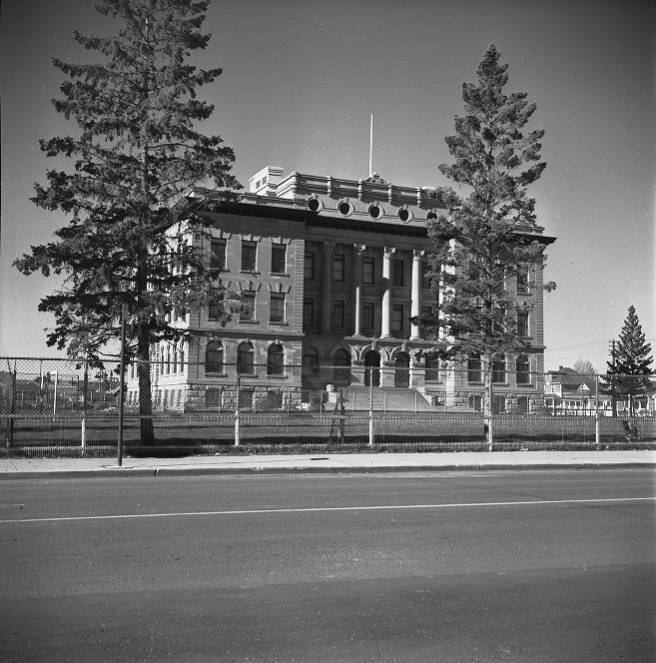
To replicate authentic column capitals and other decorative elements, restorers hired skilled stonemasons and sourced sandstone from a quarry near Lethbridge. A “1986” inscription on the McDougall Centre’s west façade commemorates this restoration.
In 2015, another exterior restoration project addressed damage caused by Calgary’s freeze-thaw cycles, which had eroded the soft local sandstone. Calgary, once known as the “Sandstone City,” has a rich history of sandstone construction dating back to the late 1800s.
The Legacy of the Normal School
During World War II, teacher training temporarily moved to King Edward School. After the war, training returned to the Provincial Institute of Technology and Art. Anticipating an influx of veterans and growing demand for post-secondary education, Alberta’s government restructured teacher training.
In 1945, the University of Alberta assumed responsibility for teacher education, consolidating Alberta’s normal schools into its Faculty of Education. Calgary’s normal school became a satellite campus of the University of Alberta. In 1958, it was renamed the University of Alberta in Calgary. A new campus opened in 1960, and in 1966, this branch became the autonomous University of Calgary. Thus, the normal school established in 1908 is a direct precursor to today’s University of Calgary.