

In the 1870s, the southwestern part of the Northwest Territories, which later became Alberta, had virtually no workforce. Employment opportunities began to emerge after the construction of the first tracks by the Canadian Pacific Railway (CPR). The railway boom created a demand for the first manufacturing enterprises in the region.
For workers arriving in Alberta over the next 30 years, employment was available in four main environments: the first was the large-scale construction of the railway; the second was in the coal mining towns; the third was in the growing urban centers in the same fields, including construction, railways, retail, domestic service, and the public sector; and the fourth was in agriculture. Read more about how professional history developed in Alberta within these four environments below at calgary1.one.
Inhumane Conditions for Railway Workers
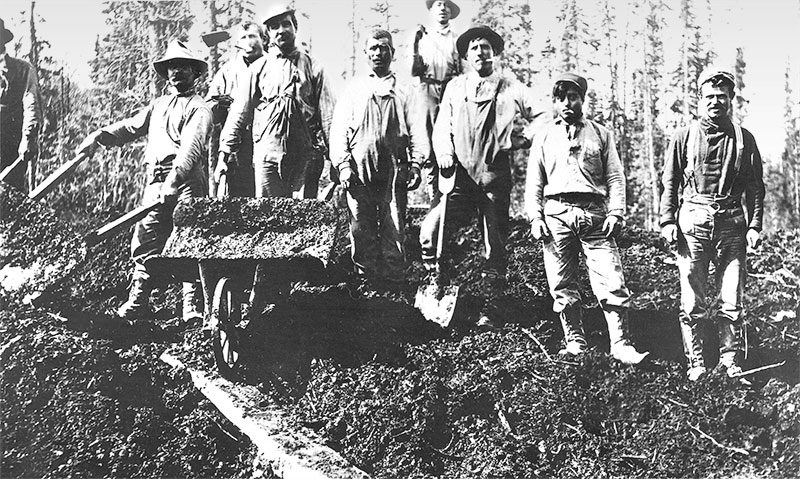
Between 1883 and 1914, three transcontinental railways were constructed across Alberta, along with lines to some coal mines. In the early 1880s, workers for the CPR were recruited from central and eastern Canada. The most dangerous work was assigned to Chinese settlers.
The harsh working and living conditions in the workers’ camps cost many lives, as employers provided no proper medical care and the government did not impose labor exploitation restrictions. This led to the spread of influenza, diphtheria, mountain fever, and rheumatism among workers. Thousands of workers were attended by just five doctors. The deaths of two workers who did not receive medical assistance led to the convening of a royal commission. However, the commission’s decision was not in favor of the workers — severely ill workers were urged to be fired and expelled from the camps.
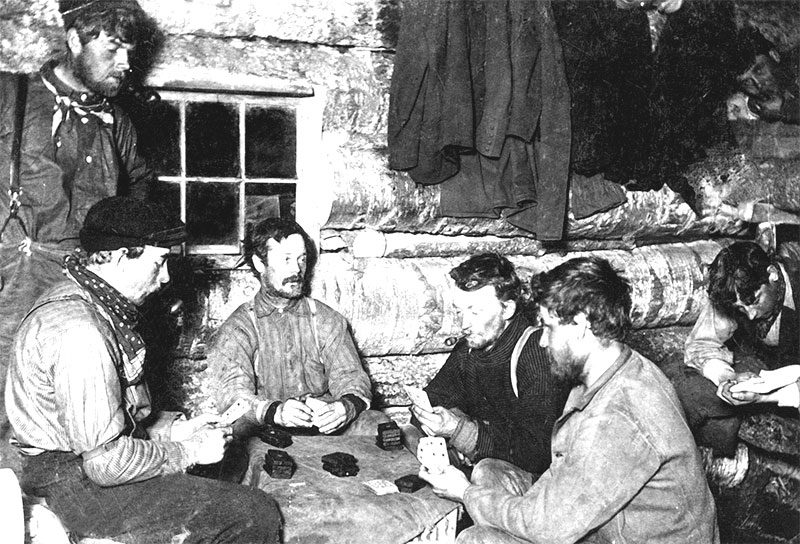
Interestingly, in most railway camps in Alberta, workers were not allowed to resign on their own. If the police caught a worker leaving before their contract ended, they were returned to work or even imprisoned. This occurred at a time when employers could withhold wages for two months or more.
In 1883 in Maple Creek and in 1885 in Beaver Creek, workers held their first strikes. They laid down their tools and refused to work. Both strikes were suppressed by the Northwest Mounted Police. By the early 1920s, 32% of the railway builders were Slavs, most of whom were Ukrainians.
Economizing on Miners’ Safety
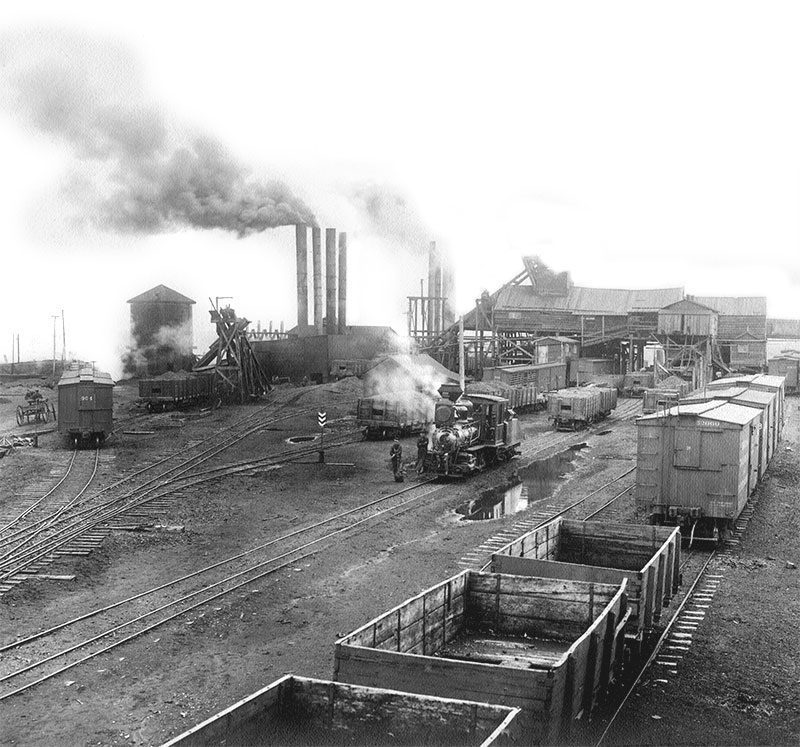
Coal was extremely important both for railway operations and for settling the southern prairies, as there was no alternative fuel for heating homes. Soft brown coal, which was used for heating, was mined in Drumheller, Lethbridge, Taber, and Edmonton, while hard bituminous coal was extracted in Canmore, Yellowhead, Coal Branch, and Crowsnest Pass.
Coal mining was physically dangerous, leading to a confrontation between workers and employers. The latter refused to reduce the level of danger in underground mines, as providing workers with protective gear, ventilation, and other measures would incur additional costs. Miners complained that the ponies used to transport coal in the mines were treated better than the men, as it cost money to replace the ponies, but men could be replaced for free.
The main buyer of coal was the railway. Coal producers relied on railways not only for profit but also for logistics, as the railway transported coal to markets outside the province.
At the same time, while North American workers were increasing the working day and speeding up production, coal mine owners in Alberta refrained from such pressure on workers. Instead, they gained notoriety for their dangerous working conditions and fluctuating wages, as coal prices were unstable.
The number of fatalities in Alberta and British Columbia exceeded their numbers in Nova Scotia and the United States by more than twice. In 1910, a disaster occurred at the Bellevue mine, killing 31 miners, and in 1914, a disaster in Hillcrest killed 189 miners.
Accidents in Crowsnest Pass occurred almost weekly, as the coal there contained an extremely large amount of methane, which caused explosions. In addition, the coal seams were usually inclined at 13-26 degrees, leading to accidents during transportation. Another reason was the attempt to reduce costs. Mine operators forced workers to use less timber for supports to save money. Poor-quality supports led to further collapses, injuries, and deaths. Cheap, dangerous explosives were also used. Miners had to buy them themselves, so they chose the cheapest.
Between 1904 and 1928, there were 1,435 serious accidents in Crowsnest Pass, not including fatalities!
Surviving in the Cities
As mentioned earlier, the early development of Alberta’s urban centers was primarily shaped by the railway. The railway brought settlers, so the location of the tracks played a crucial role in people’s choice of residence. They settled close to the tracks, and thus near or in the urban centers.
By 1891, Calgary’s population had grown to 4,000 people. At that time, there were 28 manufacturing firms employing 170 workers. The main product was directed toward the construction industry. The first unions were formed in the province, with skilled railway workers — engineers, brakemen, firemen, and others — joining them.
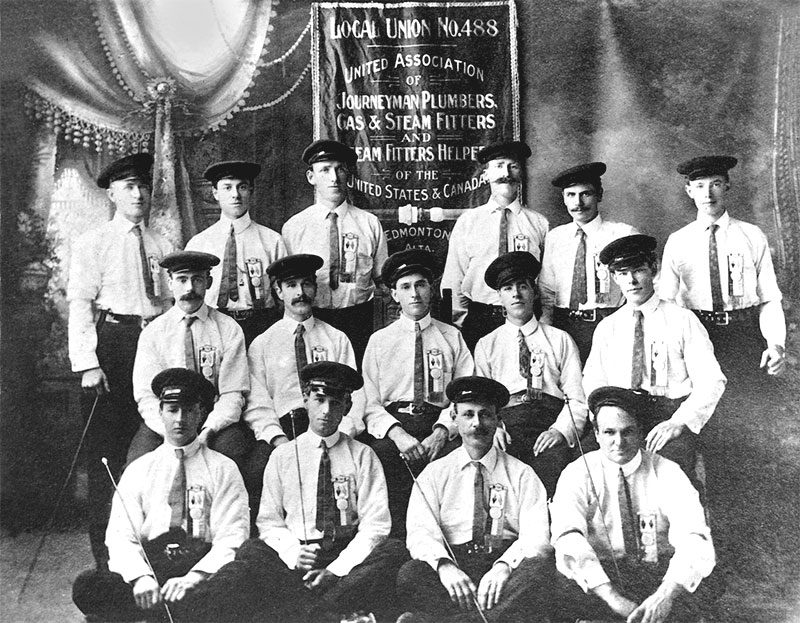
With large-scale immigration beginning around 1897, Edmonton and Calgary began to grow rapidly, leading to a construction boom. The demand for builders quickly increased. In 1902, a wave of uniting builders into unions began. Later, bricklayers, plumbers, pipefitters, confectioners, brewers, blacksmiths, bakers, barbers, and tailors followed suit. The list of professions expanded constantly.
Workers in craft unions received higher wages and a better social status. However, even then, wages in Canada were exceptionally low compared to European countries or the United States. To survive financially, men began to co-operate with women, forming families, as living alone was financially difficult. It’s worth noting that the list of professions available to women at that time was very limited, and they were paid even less than men.
To solve the financial shortage, several strategies were used: they kept livestock, involved their children in work (they worked as street vendors or shoe cleaners), and women often resorted to prostitution.
Difficult Agricultural Work
Starting in 1897, the pace of immigration from central and eastern Canada to Alberta accelerated. The government attracted them with free homestead plots and rising world wheat prices. However, the newcomers faced a lack of capital for farming. To survive, they used hired labor.
Immigrants were actively recruited to work on farms as cheap labor. Relations between farmers and hired workers created a unique labor culture. On the one hand, the farmer was a budding capitalist and at the same time an employer. On the other hand, workers were usually small landowners themselves, or at least aspired to be, and saved money.
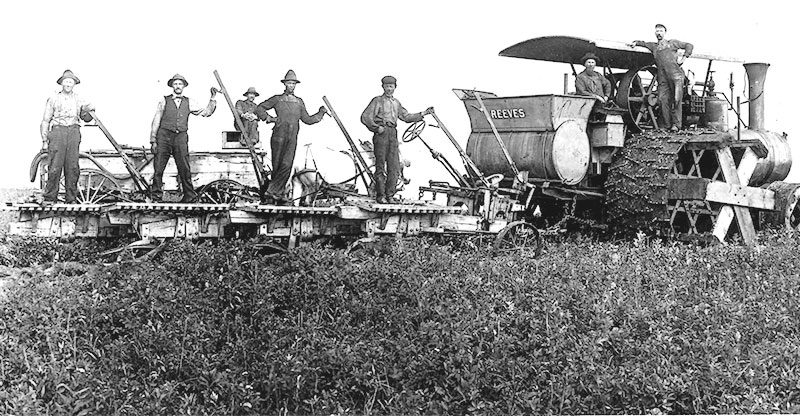
It was not easy to gather money for one’s own farm. Farmers paid for work with a room to stay in and food during the winter months. Wages were also influenced by the harvest and the existing work experience. In 1909, the average annual wage for a farm worker was $242. Unlike all other workers, farm workers rarely resorted to strikes. Their solution to problems was simple: change employers, which was easy to do at that time since there were many farms.