

The Bow Valley Ranche Restaurant, located in the heart of Fish Creek Provincial Park, is a place where urban elegance meets rustic charm. The venue offers a unique atmosphere and fresh Canadian cuisine. It’s the perfect vintage location for celebrating any event—corporate functions, birthdays, rustic weddings, and more. The restaurant’s veranda was recognized as one of the best outdoor dining spots in the country. However, Bow Valley Ranche is not just a charming establishment; it is also a historical landmark. Read more about it below on calgary1.one.
Creation of the Farm by Thompson
The first Europeans arrived at the foothills of the Rocky Mountains around the mid-18th century. In 1767, British explorer David Thompson visited the confluence of the Bow and Elbow rivers. After him, fur traders and missionaries came to the area.
In the 1870s, farmer and hunter John Glenn settled by the Bow River. Before coming to this land, he had searched for gold in California and the Caribbean, traveling across the West. John Glenn is the figure who started the history of the restaurant. However, at that time, it was simply a farm.
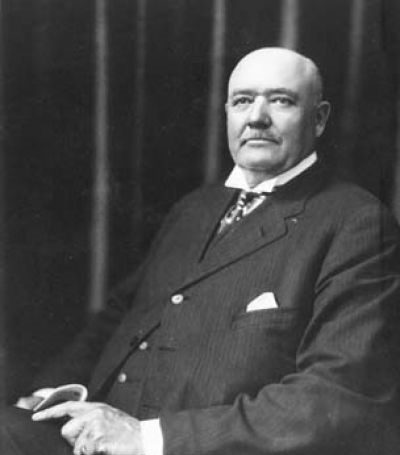
Glenn built a log house and several barns, creating Alberta’s first irrigation system. By 1879, he had everything set up and eventually had a good potato harvest.
Two years earlier, the Confederation of the Blackfoot with the Sarsi and Stoney tribes signed an agreement with the federal government, which required indigenous people to sell their land to the government for cash. These purchased lands would later be used to teach local inhabitants how to farm.
The government purchased John Glenn’s land for $350 as a training farm. They appointed Superintendent John Lehman to teach the local indigenous people how to farm. A few years later, the training program was stopped, and the government decided to sell the land.
Establishment of a Tourist Ranch by the Hall Brothers
The farm was bought by William Roper Hall and his brother John. Before purchasing the land, they drove 1,200 horses from Kamloops (British Columbia) through Crowsnest Pass to Calgary.
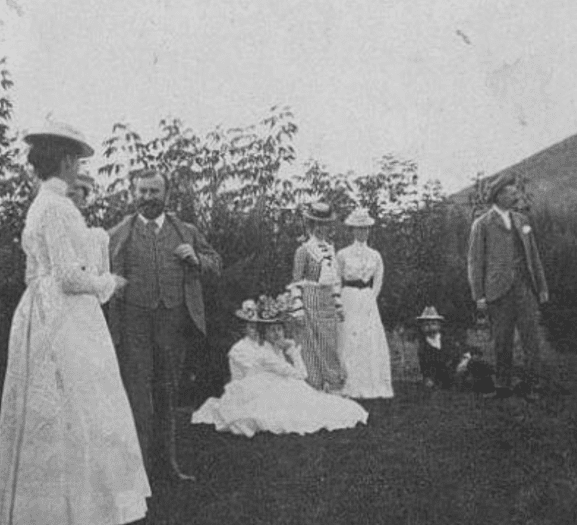
William Roper Hall They were so fond of the land that they decided to settle permanently. Initially, they made a deal with Canadian Pacific Railways to supply beef for railway workers in British Columbia, later expanding their business by opening a chain of 15 butcher shops. To prepare cattle for slaughter, they needed proper facilities. They decided to buy a 4,000-acre farm—Bow Valley—from the government for $30,000.
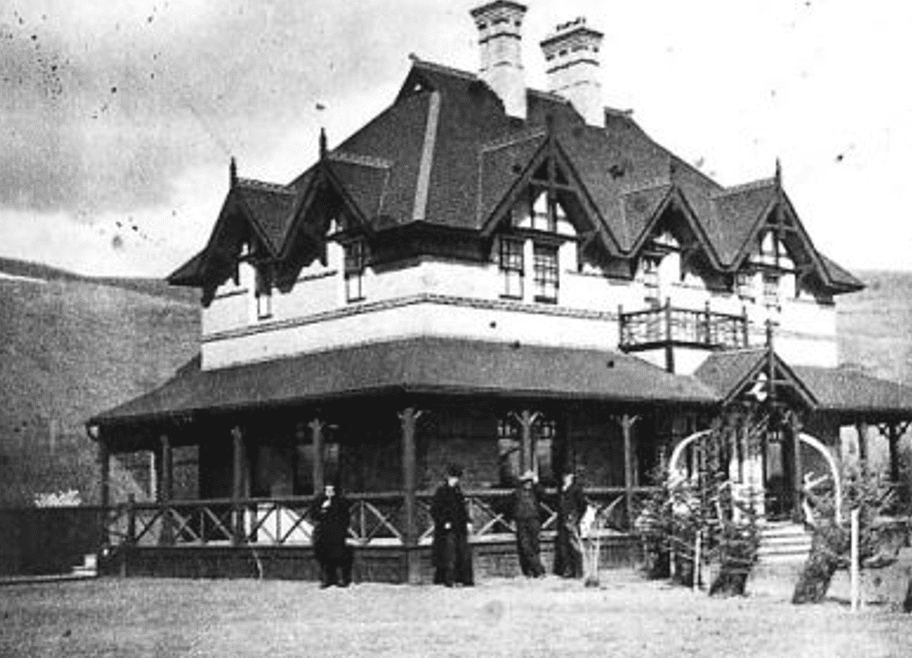
The brothers upgraded the farm, replacing the original log cabin with a two-story brick house. They also hired another worker, Charlie Yuen. They turned the ranch into an exhibition venue, attracting local and international tourists. Popular activities included tennis and an outdoor pool.
However, with the growth of the community, land use shifted: cattle ranching displaced farming. The Hall brothers sold the property to a new owner.
Improvement of the Farm by Burns
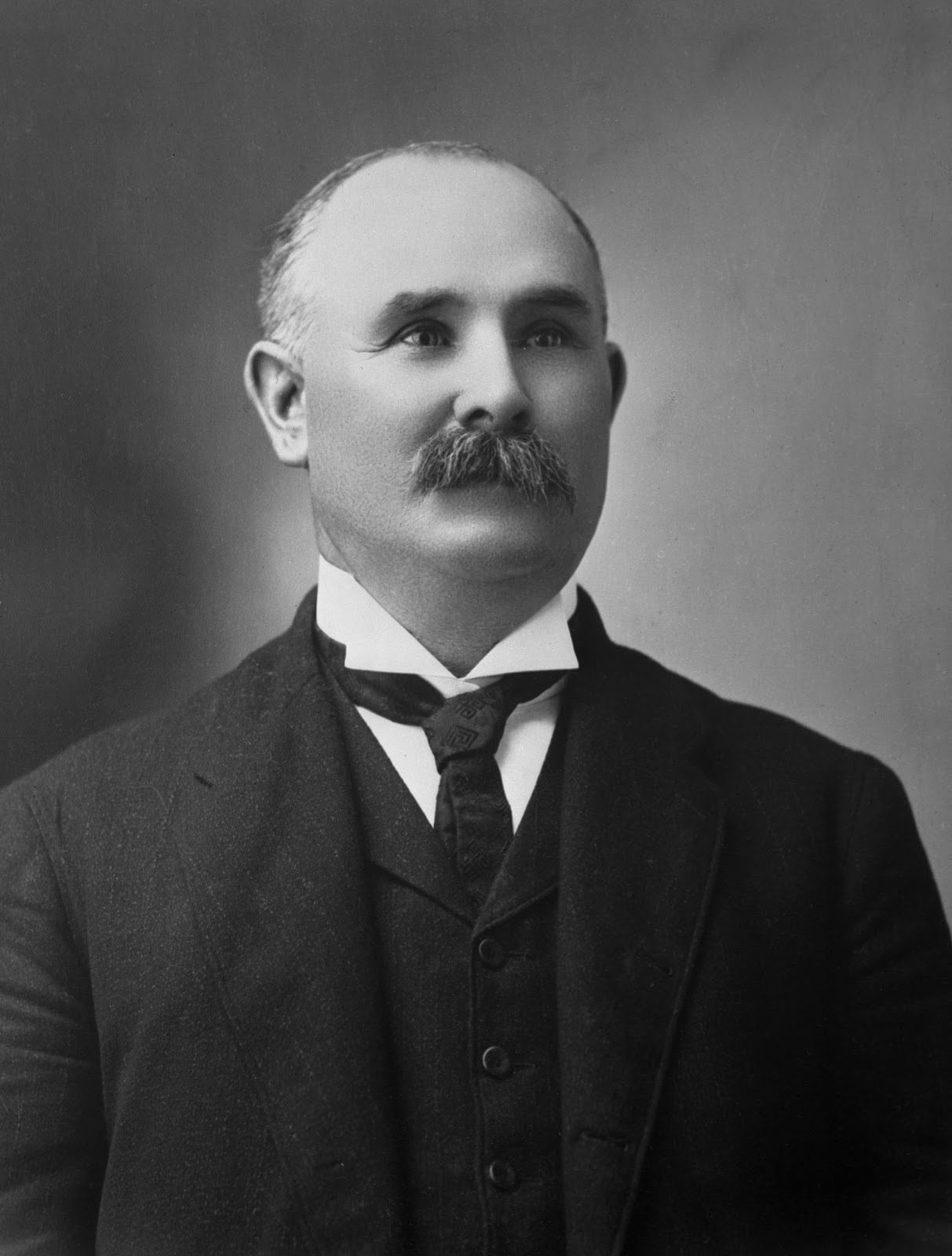
In 1902, the farm was purchased by Patrick Burns from Oshawa (Ontario), who had already earned a reputation in Calgary as a leading ranch owner and meat producer. In 1898, he built a packing plant in Calgary and later in other Canadian cities, and his company, P. Burns & Co., became one of the largest meat-processing businesses in Western Canada.
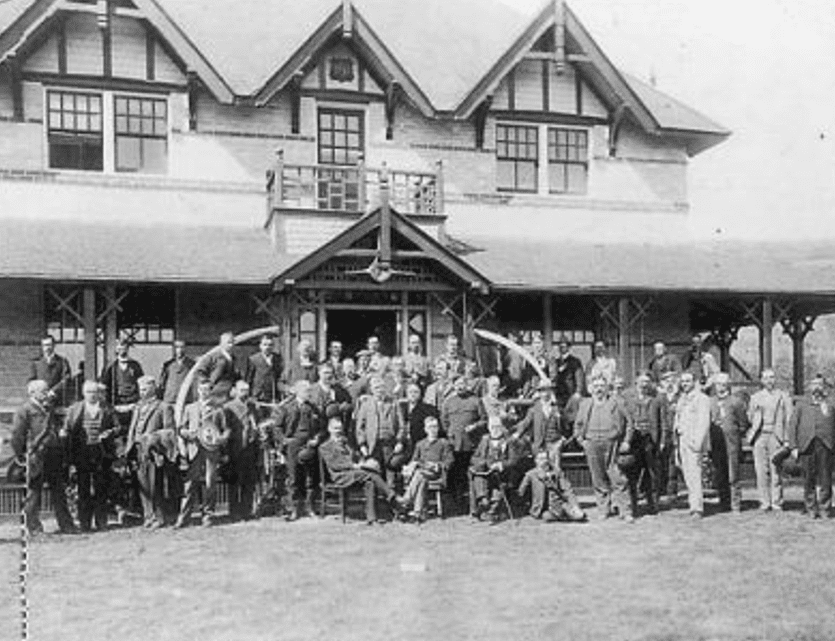
Burns also purchased adjacent land, expanding Bow Valley Ranch to 20,000 acres, bordered by Stampede Park to the north, the Bow River to the east, 146th Avenue to the south, and Macleod Trail to the west.
Burns was one of the key pioneers in the development of cattle ranching in Alberta. He bought large herds of Hereford cattle, using them to improve the bloodlines of cattle owned by fellow ranchers. Burns once prepared 250,000 tons of hay for winter feed, repaired pens and troughs, and introduced modern feeding technologies for the time. Charlie Yuen continued working at the farm, ensuring the comfort of every visitor to Bow Valley.
In addition to this ranch, Burns owned five others by 1912. He was part of the “Big Four”—four Alberta ranch magnates who financed the creation of the Calgary Stampede rodeo festival. Burns’s ranches were so vast that he could travel from Cochrane (Alberta) to the U.S. border without leaving his land.
Patrick continuously upgraded his holdings with new equipment and also developed methods for processing animal by-products to use them efficiently. For example, he proposed using fats for soap making, bones for bone meal, and hair for brush making.
Burns paid great attention to nature conservation. Understanding the value of the trees in the Fish Creek valley, he instructed the construction of fences around the aspens and poplars to protect them from livestock. Additionally, approximately 2,000 poplars were planted along Macleod Trail.
The Rise of Patrick Burns
Before World War I, Patrick had earned a reputation as one of Canada’s most successful entrepreneurs. He served as a senator for five years and devoted much time to philanthropy. His butcher shops were spread across Western Canada and even abroad, and he also opened many dairies, provision houses, and fruit factories. In 1928, he sold his meat-processing business and dedicated all his time to ranching, which was his greatest passion.
The Successive Owners
After Patrick Burns’s death in 1937, his nephew, Michael John Burns, moved into the house at Bow Valley Ranch, becoming the heir to the business. During his time, cattle ranching on the farm flourished, and he preserved the tradition of true western hospitality established by Patrick.
Due to declining health, Michael John moved to Calgary in 1950. His son Richard T.J. Burns took over the business. Richard moved to the ranch and made several improvements, including building a tennis court, pool, and adding another floor to the Ranche House. Richard lived there for 20 years, and between 1970 and 1973, Ranche House was leased to Calgary stockbroker Robert Peters.
In 1973, the Alberta government purchased 1,400 acres of the Bow Valley Ranch along Fish Creek from Macleod Trail to the Bow River, along with some other adjacent land. In June 1975, Alberta Premier Peter Lougheed declared the area housing the Fish Creek Provincial Park to be the property of all citizens.
The Restaurant Opening
In 1995, local residents Larry and Mitzi Vasily, concerned about the decline of this historic landmark and the lack of government funds for its restoration, established the Fish Creek Ranch Restoration Society to restore the farm, which operated at the beginning of the 20th century. In 1997, the Brigadier’s House was restored, and two years later, Ranche House was renovated. In the newly restored Ranche House, a fine dining restaurant opened in 1999.
In 2000, the lush gardens located between the two buildings were opened to the public. Early in 2014, Great Events Group took over the management of the property, restoring it to its original look and reopening the restaurant. The venue became a fashionable spot with popular social gatherings and exquisite cuisine, offering first-class Canadian dishes.